
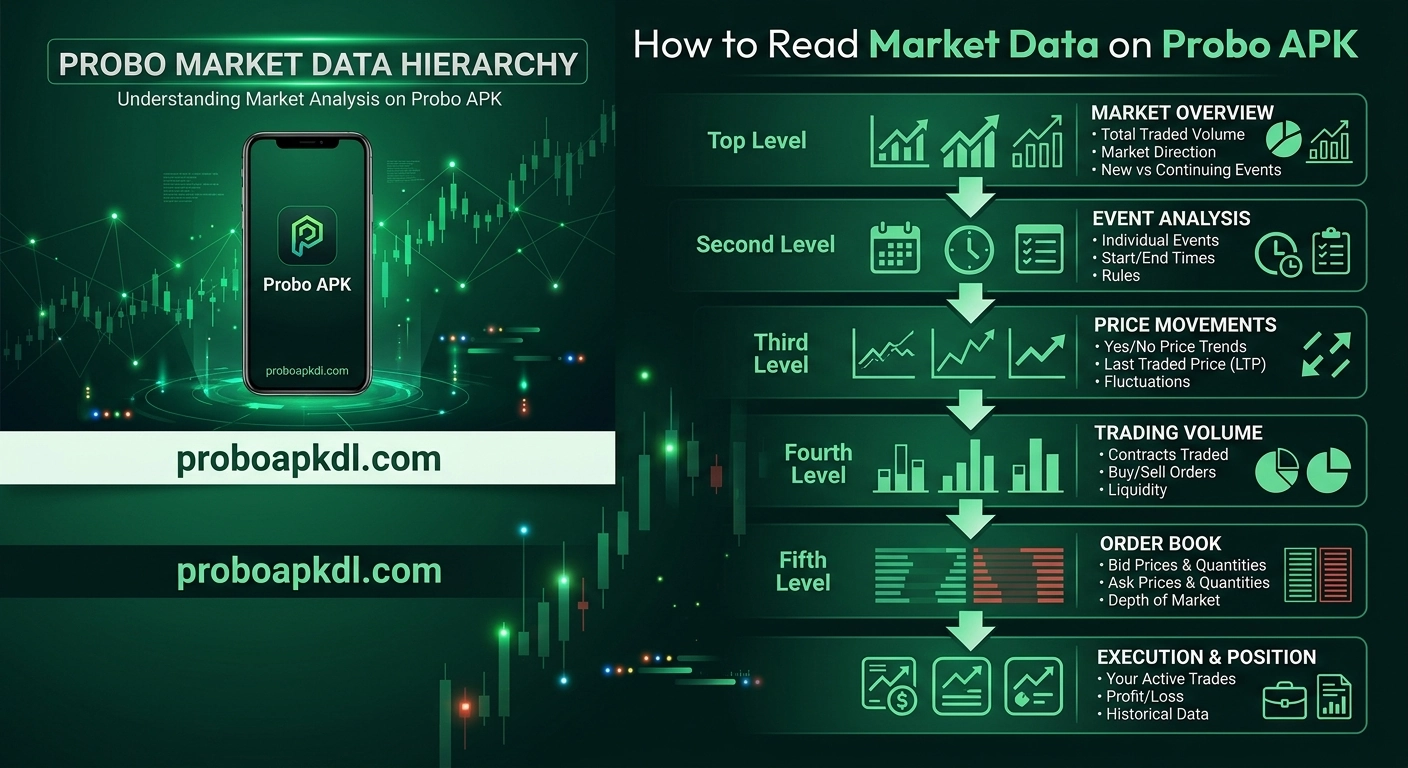
How to Read Market Data on Probo APK
Understanding market data on opinion trading platforms like Probo APP can help you make more informed decisions. Many users join opinion trading apps every day, yet few take the time to analyze market trends before placing predictions. When you learn to interpret changing probabilities, price charts, and trading volumes, you can better understand market activity. This beginner-friendly guide explains how to read market data efficiently.
What Is Market Data on Probo APK?
Market data represents live information about opinion events listed on the application. When you open an opinion event on Probo Earning APK, you can see prices, probabilities, trade volumes, and recent price histories. These metrics reflect current market sentiment and user activity.
Instead of relying only on emotions, you can analyze this data to understand what the broader market expects. The primary numbers show the current price of a “Yes” or “No” option. Consequently, understanding these basic metrics helps you evaluate risk and identify market shifts before making a trade.
Key Market Metrics You Need to Track
To analyze events accurately on Probo Earning APP, focus on three fundamental metrics:
- Event Price and Odds: The price of an entry can indicate the market’s current expectation about an outcome. A higher price generally indicates a higher implied probability.
- Volume and Liquidity: Total volume shows the level of trading activity around a specific question. Higher activity can make it easier to enter or exit a position.
- Price History Chart: Graphs display price fluctuations over time. Monitoring these curves helps you understand recent market movements before making a trade.
How to Read Odds and Probabilities
Reading probabilities requires understanding the relationship between share prices and potential payouts. When a contract has a ₹10 settlement value, a “Yes” trade priced at ₹6 implies a 60% probability based on that price.
Furthermore, if your prediction proves correct, the difference between the settlement value and purchase price represents the potential gross profit before applicable costs. Conversely, if the event outcome goes against you, you can lose the amount invested. Tracking these price levels helps you understand potential risk and return before committing funds to an active trade.
| Option | Share Price | Implied Probability | Potential Return (on ₹10 Settlement) |
| Yes | ₹6.00 | 60% | ₹4.00 profit |
| No | ₹4.00 | 40% | ₹6.00 profit |
Analyzing Price Movements and Market Sentiment
Prices on opinion markets can change frequently. News updates, live sports events, economic announcements, and public interest can push prices up or down. Whenever fresh information emerges, users may adjust their opinions on Probo Trading APP.
To understand these shifts, monitor live events alongside the app’s internal charts. For instance, if a cricket team loses key wickets rapidly, the market price for their victory may decline. Experienced users may monitor these momentum changes and adjust their positions based on new information. Comparing real-world developments with market movements can also help you understand changing sentiment.

Smart Strategies for Data-Driven Decisions
Effective market analysis requires discipline and consistent research rather than pure intuition. Always combine available statistics with current platform data.
First, cross-check event odds with reliable external statistics, forecasts, and verified news updates. Second, avoid placing large trades on illiquid events with low trading activity. Third, consider monitoring your positions and reviewing available exit options when market conditions change. Using these habits on Probo Game can keep your analysis structured while helping you understand market volatility.
Conclusion
Understanding market data on Probo Play Store allows you to make decisions based on available information rather than guesswork. By checking odds, tracking event volume, monitoring price history, and following relevant news, you can develop a stronger analytical approach. Always practice responsible risk management, stay updated with reliable information, and base your decisions on clear market data.